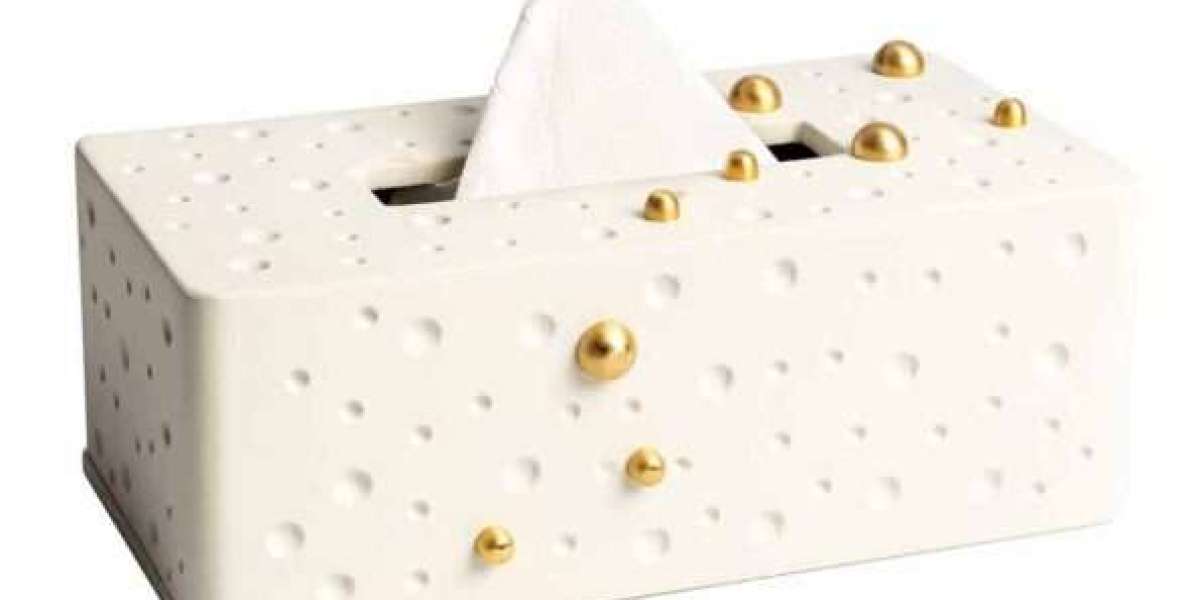

There is a particular kind of visual dissonance that every interior designer recognises instantly. A room that has been assembled with genuine care, the right sofa, the considered lamp, the artisan tray placed at precisely the correct angle on a console, and then, sitting at the centre of the nightstand or perched on the powder room shelf, a bright cardboard retail tissue box. Loud typography. Corporate colour blocking. The brand's logo is in bold. It takes less than a second for that single object to break the visual logic that the entire room has been working to establish.
This is not a minor detail. The human eye, when scanning a designed space, is exceptionally good at finding the thing that does not belong. A cardboard box does not belong in a room finished to a high standard, not because it is unhygienic or impractical, but because it communicates, clearly and immediately, that the design stopped at a certain point. The most considered interiors are the ones where it never did.
The Luxury Material Matrix
The material a tissue box cover is made from determines not just how it looks, but what kind of room it belongs in and what emotional register it reinforces. The table below maps premium material profiles against their visual character and their ideal architectural companions.
Material Profile | Visual and Tactile Language | Best Architectural Companion |
Polished Brass | Warm, reflective, weighted, carries a golden depth that amplifies ambient light | Moody powder rooms, dark-toned vanities, rich jewel-palette bedrooms |
Honed Marble | Cool, veined, architecturally composed, tactile authority without ostentation | Minimalist console tables, spa-style bathrooms, pale neutral living rooms |
Artisan Wood | Warm grain, organic texture, quietly grounding, the material of heirlooms | Earthy and Japandi-influenced interiors, study rooms, bedroom sanctuaries |
Sleek Fiberglass | Crisp lines, matte or high-gloss finishes, featherlight but structurally precise | Contemporary and Minimalist spaces, hotel-style guest rooms, powder rooms |
Brushed Gunmetal / Pewter | Industrial softness, muted reflectivity, quietly masculine gravitas | Loft-style interiors, grey-toned modern apartments, statement bathrooms |
No single material is universally correct. The right choice is always the one that creates an echo between the tissue box holder and the room's existing material palette, a brass cover in a room already anchored by brass hardware, a marble cover on a surface that already carries stone. The cover should feel like it was always there.
Spatial Styling Vignettes
The Living Room Console: Composition as Design Practice
The console table in a well-dressed living room is one of the most compositionally demanding surfaces in the home. It operates as a horizontal stage, visible from multiple angles, large enough to hold several objects, and public enough to communicate the design intelligence of whoever assembled it.
The mistake most homeowners make is treating the console as a collection point rather than a composition. Objects accumulate rather than relate. A tissue box holder, introduced thoughtfully into this surface, functions as a structural anchor within a larger vignette.
Designer's approach: A brushed brass tissue box cover placed at one end of the console, counterbalanced by a sculptural bookend or a low ceramic vessel on the opposite end. Between them: an artisan tray grouping a candle, a small decorative object, and perhaps a single book with a considered cover. The tissue holder is not hidden in this arrangement; it is a participant. Its material connects it to the other brass or warm-metal elements in the room, and its clean, architectural silhouette holds its position without demanding attention. The practical function is served entirely. The composition remains uninterrupted.
The principle at work is material continuity. When every decorative item in a home vignette shares an underlying tonal or material logic, the eye reads the whole arrangement as intentional rather than assembled.
The Sanctuary Bedroom: The Nightstand as Still Life
The nightstand is perhaps the most personal surface in the home, and, ironically, one of the most neglected from a design standpoint. It accumulates the practical residue of daily life: a phone charger, a glass of water, a book mid-read. Adding a retail tissue box to this surface rarely improves matters.
A minimalist tissue box cover changes the entire calculus of the nightstand. Where the cardboard box introduces noise, colour, typography, brand identity, a cover in honed marble or a slim white ceramic profile introduces quiet. The surface reads as considered rather than loaded.
Designer's approach: A low-profile matte tissue box cover in pale stone or soft white fiberglass, positioned at the back corner of the nightstand, leaves the foreground clear for the lamp, a single personal object, and whatever the evening requires. The cover's material should match or closely echo the lamp base or the bedside tray, reinforcing the sense that the entire surface was designed as a unit rather than populated over time.
In the bedroom, the reward for this kind of attention is felt rather than analysed. The room simply feels more restful. The visual system is not working to resolve inconsistencies, so it rests. That ease is the actual product of considered design.
The High-Impact Powder Room: Hospitality as a Design Statement
The powder room is the space where guests spend uninterrupted time, alone, in close proximity to every surface. There is no conversation to distract them, no room beyond it drawing their attention. They notice everything, the soap dispenser, the towel fold, the quality of the mirror frame, and yes, the tissue box.
A well-chosen tissue box holder in a powder room is not a small detail. It is, in the context of that confined, highly scrutinised space, a significant statement about the standard to which the entire home is held.
Designer's approach: A heavy, polished brass or antique gold tissue box cover in a powder room with dark walls, a deep navy, a forest green, and a charcoal, functions as a jewel-toned accent that connects directly to the room's intent. The weight of the metal, audible when the cover is placed back down, reinforces the quality of the experience. Pair it with a matching soap dispenser and a small tray in the same material family, and the powder room becomes a cohesive, hotel-grade hospitality moment that guests register, consciously or otherwise, as exceptional.
Discover Creo Living's full collection of luxury home decor, designer furniture, artisan lamps, premium serveware, and bespoke gifting at pk.creoliving.com, because the homes that feel the most considered are the ones where nothing, not even the smallest detail, was left to chance.
FAQs
1. Will standard Pakistani market tissue boxes fit into luxury covers?
A: Most premium tissue box covers are designed to accommodate standard boutique tissue box dimensions, typically around 12 x 12 x 13 cm. Before purchasing, confirm the internal cavity dimensions of any cover against the dimensions of the tissue box you intend to use. Creo Living's tissue covers are sized to fit the most widely available tissue formats in the Pakistani market without modification.
2. How do I clean and maintain a marble or brass tissue box cover?
A: For marble covers, a slightly damp soft cloth is sufficient for routine cleaning. Avoid acidic cleaners, vinegar, and citrus-based sprays, which can etch the stone surface over time. For brass covers, a gentle wipe with a dry microfibre cloth after handling prevents fingerprint accumulation. For deeper cleaning, a mild soap solution on a soft cloth, followed by immediate drying, preserves the finish. Never use abrasive sponges or bleach-based products on either material.
3. Can a tissue box cover work as a gifting item?
A: It is, in fact, one of the most practical and visually impressive gifts in the luxury home category, precisely because it is an object people use daily but rarely invest in for themselves. A premium tissue box holder in polished brass or hand-finished stone arrives as an unexpected, highly considered choice that signals real attention to the recipient's home and lifestyle. Paired with other decorative items for home, a matching tray, a candle, and a small sculptural piece, it makes for a cohesive, memorable gift set.
4. How many tissue covers does a home typically need, and should they match?
A: The practical answer is one per active surface, living room console, master bedroom nightstand, powder room vanity, and guest bedroom, if applicable. They do not need to match exactly, but they should share a material or tonal logic. A brass cover in the powder room and a brushed gold cover on the bedroom nightstand, for instance, feel coherent without being uniform. Identical covers across every room can feel like a hotel catalogue; related but distinct covers feel like a home with a clear, evolved aesthetic point of view.